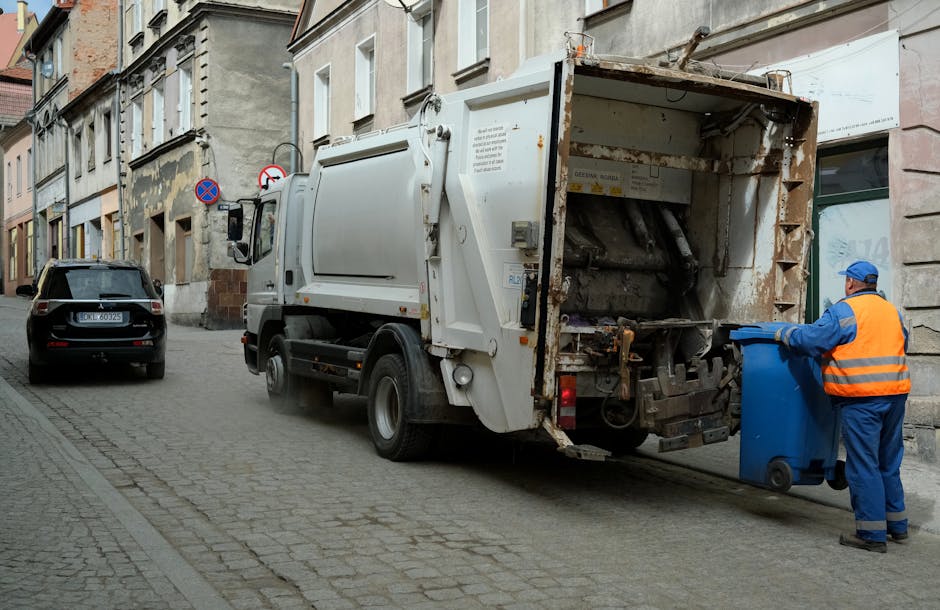
Tring Market Place Bulky Rubbish Removal Success Story
Bulky rubbish removal sounds simple on paper. In real life, it usually means awkward lifting, limited space, a tight timetable, and at least one item that refuses to fit through a doorway without a minor argument. That is exactly why the Tring Market Place bulky rubbish removal success story stands out: it is a practical example of how a well-planned clearance can turn a messy, stressful space into something usable again.
If you are dealing with old furniture, broken appliances, garden waste, mixed junk, or the kind of clutter that has quietly multiplied in a corner, this guide will help you understand what happened, why it worked, and how to approach a similar job properly. We will cover the process, the benefits, the common pitfalls, and the best way to get a reliable result without turning the day into a saga.
Contents
- Why Tring Market Place bulky rubbish removal success story Matters
- How Tring Market Place bulky rubbish removal success story Works
- Key Benefits and Practical Advantages
- Who This Is For and When It Makes Sense
- Step-by-Step Guidance
- Expert Tips for Better Results
- Common Mistakes to Avoid
- Tools, Resources and Recommendations
- Law, Compliance, Standards, or Best Practice
- Options, Methods, or Comparison Table
- Case Study or Real-World Example
- Practical Checklist
- Conclusion
- Frequently Asked Questions
Why Tring Market Place bulky rubbish removal success story Matters
Tring Market Place is the kind of place where appearance matters. It is central, visible, and often busy. So when bulky rubbish starts building up outside a property, in a rear access point, or in a shared storage area, the impact is immediate. It affects kerb appeal, access, safety, and how people feel about the space. Nobody wants to step around a sofa arm or a stack of old boards on a narrow route at the wrong time of day.
This success story matters because it shows that bulky rubbish removal is not just about taking items away. It is about restoring order, improving access, and avoiding the little knock-on problems that often get ignored until they become expensive or awkward. A good clearance can help a homeowner, landlord, shop owner, or managing agent regain control quickly, and that is worth quite a lot.
In a busy town setting, the timing is important too. There may be pedestrians, parking limits, neighbours nearby, and limited space to manoeuvre. A removal plan that works in an open driveway can fall apart in a tighter market-place layout. That is why this kind of job rewards organisation, clear communication, and the right equipment. Simple enough? In theory, yes. In practice, not always.
Expert summary: The strongest bulky rubbish removals are rarely the most dramatic ones. They are the ones that are planned properly, cleared safely, and finished without disruption to the street, the neighbours, or your day.
How Tring Market Place bulky rubbish removal success story Works
A successful bulky rubbish removal in Tring Market Place usually follows a straightforward pattern. First comes a quick review of what needs to go. Then comes a plan for access, lifting, sorting, and disposal. After that, the heavy items are removed in a way that keeps the route clear and avoids unnecessary damage. It sounds obvious, but a lot of time-saving comes from that first careful look.
The process often begins with identifying item type and volume. One sofa is not the same as a sofa, two wardrobes, and half a garage's worth of broken furniture. The team also needs to know whether items are reusable, recyclable, or simply waste. That distinction matters, especially when you are trying to reduce the amount sent to landfill and keep the clearance efficient.
Access is the next big thing. Can the items come straight out through the front? Is there a side gate? Are stairs involved? Is parking tight? These questions shape the job before anyone touches a thing. A good crew will also check for fragile surfaces, shared hallways, low ceilings, awkward corners, and anything else that could make a simple lift turn into a bruised-wall moment. Nobody wants that.
Once the route is understood, the bulky items can be removed systematically. Heavy objects are moved first if they block access. Loose waste is bagged or grouped. Reusable furniture may be separated for a different disposal path. The end result should be a clean space, no mess left behind, and a sensible disposal trail that matches current UK waste best practice.
For bigger clearances, the work may overlap with related services such as house clearance, garage clearance, or waste removal. That is often where the job becomes easier, because the right service match prevents duplication and unnecessary handling.
Key Benefits and Practical Advantages
The biggest benefit is obvious: the rubbish goes. But there is more to it than that, and it is worth spelling out because the practical gains are often what persuade people to act sooner rather than later.
- Better safety: bulky waste creates trip hazards, blocked routes, and lifting risks.
- More usable space: once the clutter is gone, you can actually use the area again.
- Cleaner presentation: this matters for homes, rental properties, businesses, and shared entrances.
- Less stress: when the job is handled properly, there is one less thing hanging over you.
- Faster turnaround: a structured clearance can be completed far quicker than a piecemeal DIY approach.
There is also a hidden advantage: decision fatigue disappears. We have all been there, standing in front of an old wardrobe thinking, "Should I keep this? fix it? drag it to the skip? leave it for another weekend?" The answer is usually no, and the longer it sits there, the heavier it feels. A clean removal cuts through that.
For businesses or landlords in particular, the difference can be operational. A blocked back entrance, a cluttered service area, or a mess left after tenants move out can slow everything down. That is where a coordinated clearance can support broader services like office clearance or business waste removal, depending on the setting.
Who This Is For and When It Makes Sense
This kind of bulky rubbish removal is useful for a wide mix of people. If you are wondering whether it is for you, the short answer is probably yes if the items are too large, too heavy, or too awkward for a normal bin run.
It makes sense for:
- Homeowners clearing out old furniture, white goods, or mixed household clutter
- Landlords dealing with leftover items after a move-out
- Shop owners or local businesses with bulky packaging, displays, or broken stock fixtures
- People preparing a property for sale, rental, or refurbishment
- Anyone who cannot safely lift or transport large items themselves
Sometimes the trigger is a single event, like a renovation or a tenancy change. Sometimes it is gradual, with things piling up for months. Truth be told, the gradual version is more common. One old chest of drawers becomes two, then a broken table appears, then a few bags of odds and ends join the party. Not the kind of party you asked for.
If the clutter is mixed and spread across different parts of the property, a broader service such as home clearance or even flat clearance may be the better fit. For heavier old household items specifically, furniture clearance or furniture disposal can be more efficient.
Step-by-Step Guidance
If you want a smoother result, treat bulky rubbish removal as a small project rather than a rushed task. Here is a practical approach that works well in real life.
- Walk the site first. Look at what is actually there, not just what you remember from last week. Conditions change. Boxes move, rain gets in, and things always seem bigger when you are carrying them.
- Separate the obvious categories. Put furniture, general waste, scrap wood, garden debris, and anything reusable into rough groups. You do not need museum-level sorting, just a sensible starting point.
- Check access carefully. Measure doorways if you need to, open gates, move cars if required, and think about the route from the item to the vehicle.
- Identify anything risky. Watch for broken glass, nails, loose fittings, damp material, mould, or very heavy objects that need two-person lifting.
- Decide what should be recycled or reused. This is often overlooked. Some items are too worn for donation, but many parts can still be separated for recycling.
- Book the right type of clearance. If it is mainly household clutter, use a home or house clearance approach. If it is a garden pile, choose a garden-specific service. If it is renovation debris, builders' waste may be better.
- Confirm timing and access instructions. Small details matter. Where can the vehicle park? Is there a gate code? Is the area shared? That kind of thing.
- Clear in a logical sequence. Remove the biggest blockers first, then smaller items, then sweep up and check for missed debris.
A good clearance should feel orderly. Not perfect, just orderly. That small distinction saves time and frustration.
Expert Tips for Better Results
There are a few habits that consistently make bulky rubbish removal easier. They are not glamorous, but they work.
- Take photos before the job starts. This helps with quoting, planning, and avoiding confusion about what is included.
- Keep a clear path. Even moving one wheelie bin, bike, or plant pot can make a big difference in a narrow access area.
- Do not overfill bags. This sounds minor, but overpacked bags are awkward and unsafe to move. And they rip at the worst moment, naturally.
- Set aside valuables first. It sounds obvious, but keys, documents, chargers, and small personal items are often mixed into the clutter.
- Think about the final finish. A space can be technically cleared and still feel messy if it has dust, splinters, or loose fragments left behind.
If you are dealing with awkward items like heavy cabinets, old shelving, or mixed hard waste, it can help to choose a service that has experience with builders waste clearance as well as domestic removals. The reason is simple: those jobs tend to involve mixed material, tighter lifting decisions, and more sorting on site.
One small but useful tip from experience: leave the item labels, notes, or disposal instructions visible if any apply. It avoids second-guessing. Saves time too.
Common Mistakes to Avoid
Bulky rubbish removal usually goes wrong for the same few reasons. The good news is that they are easy to avoid once you know what to look out for.
- Underestimating volume: a room full of "just a few bits" can quickly become a vehicle-load headache.
- Leaving access planning too late: if the route is blocked, the job slows down immediately.
- Mixing hazardous items with general waste: these need separate handling and should never be guessed at.
- Trying to lift alone: one-person lifting of bulky items is one of the fastest ways to strain your back or damage the property.
- Not checking what is reusable: some items may still have a second life if sorted early enough.
Another common mistake is calling every clearance by the same name. A garage full of scrap is not the same as a loft packed with boxes and old furniture. Nor is a small business clearance the same as a domestic one. Getting that categorisation right means better pricing, better planning, and fewer surprises.
Let's face it, surprises are fine at birthdays. Not so much when a sofa is wedged halfway through a doorway.
Tools, Resources and Recommendations
You do not need specialist equipment for every job, but the right tools make the process safer and cleaner. For many clearances, the essentials are basic and practical rather than fancy.
- Sturdy gloves for handling sharp or rough material
- Strong sacks or containers for loose waste
- Protective footwear with decent grip
- Basic trolley or moving aid for heavier pieces where appropriate
- Labels or marker notes for separating items to keep or remove
- Cleaning cloths or a broom for the final sweep
For anyone comparing service options, it can help to review pricing and quotes before booking. Clear pricing conversations tend to produce cleaner outcomes. Not always, but often enough to matter. You can also look at a company's approach to recycling and sustainability if you want confidence that items are being handled responsibly.
Where trust and handling standards matter, it is worth understanding operational safeguards too. Pages such as insurance and safety and health and safety policy are useful indicators that a provider takes the basics seriously.
Law, Compliance, Standards, or Best Practice
Any bulky rubbish removal in the UK should be carried out with care around waste duty of care, safe handling, and proper disposal routes. You do not need to become a compliance expert to book a clearance, but you should know the basics.
In practical terms, best practice means the waste should be handled by a responsible operator, separated where sensible, and disposed of through legitimate channels. If the material includes electrical items, sharp fragments, or potentially contaminated waste, it needs particular care. That is not a place for guesswork.
For households, landlords, and businesses, it is sensible to keep a record of what was removed and who handled it. That is especially helpful for business waste, refurbishment waste, or any clearance where accountability matters. Clear terms and transparent handling also help avoid confusion, which is why it is wise to review terms and conditions before proceeding.
If the job involves access through shared areas, narrow stairwells, or mixed-use premises, risk awareness matters even more. Safe lifting, tidy loading, and careful movement are not extras. They are the job. A provider's general standards can usually be checked through pages like about us and insurance and safety, which is a sensible place to start if you want reassurance before booking.
Options, Methods, or Comparison Table
There are a few ways to tackle bulky rubbish, and the right choice depends on quantity, urgency, access, and how much lifting you want to do yourself. Here is a plain-English comparison.
| Method | Best for | Pros | Drawbacks |
|---|---|---|---|
| DIY disposal | Very small loads and simple access | Feels low-cost at first; full control over timing | Heavy lifting, vehicle requirements, time-consuming, higher risk of damage or injury |
| Skip hire | Ongoing renovation waste or mixed household waste | Useful for staged work; good for repeated loading | Space needed; permits may be needed in some situations; items still need loading by you |
| Professional bulky rubbish removal | Large, awkward, or urgent clearances | Fast, safer, less labour for you, often better for access challenges | Requires a quote and scheduling; cost depends on load and item type |
For many people, the professional route wins simply because it removes the hardest part: the lifting and transport. If the job includes old furniture, a mix of household items, or a full room clear-out, then services such as furniture clearance and house clearance often offer the cleanest solution.
Case Study or Real-World Example
Here is a realistic example of how a success story like this typically unfolds. A property near Tring Market Place has accumulated bulky items after a mix of moving, refurbishing, and simply not getting around to the job. There is an old wardrobe, a damaged sofa, a broken dining chair set, a few bags of household waste, and some odd pieces tucked into a side area. Nothing shocking. Just enough to be annoying every time someone walks past it.
The first step is a quick assessment. The clearance team checks access, notes the size of the furniture, and identifies which items can be removed in one piece and which need careful dismantling. They also work out whether any of the material should be separated for recycling. This matters because bulky rubbish is rarely just one thing. It is usually mixed.
Then the practical part begins. The route is cleared, the heavier items are moved first, and the fragile surfaces are protected where needed. A bit of patience goes a long way here. If the sofa needs a second turn to avoid scraping a wall, so be it. Better that than a chipped plaster edge or a scratched frame.
By the end of the job, the clutter is gone, the access area is usable again, and the property feels calmer. That last part is hard to measure but easy to notice. The space breathes a little more. There is no heroic speech, no dramatic music. Just a neat result and a visible sense of relief.
This is why the Tring Market Place bulky rubbish removal success story is useful as an example. It shows that the outcome is not just "items removed". It is a better-functioning space, reduced stress, and a job done with care.
Practical Checklist
Use this checklist before booking or starting a bulky rubbish removal job. It keeps the process tidy and avoids most of the common headaches.
- Identify every item that needs to go
- Separate anything you want to keep
- Check for heavy, sharp, or awkward items
- Measure access points if the route looks tight
- Clear parking or vehicle access where possible
- Decide whether the job is furniture, household, garden, business, or builders waste
- Ask about recycling and item sorting
- Review pricing and what is included
- Confirm any time constraints or special instructions
- Make sure children, pets, and bystanders are away from the working route
- Inspect the area after removal for missed debris
A little preparation often saves a surprising amount of time. Not always glamorous, but very effective.
Get a free quote today and see how much you can save.
Conclusion
The Tring Market Place bulky rubbish removal success story is a reminder that good clearance work is part planning, part handling skill, and part common sense. The best results come from understanding the space, choosing the right service, and sorting the job properly from the start. That is how a cluttered, awkward area becomes useful again without extra drama.
If you are facing a similar clearance, the practical next step is simple: look closely at what needs removing, think about access, and choose a service that matches the actual job rather than the job you wish it was. That way, you get a cleaner result and a far less stressful day. And honestly, that is the bit most people are really after.
One cleared space can change the feel of an entire property. Funny how that works, isn't it?
Frequently Asked Questions
What does bulky rubbish removal usually include?
It usually includes large or awkward items such as furniture, white goods, broken household items, and mixed bulky waste that is too difficult to handle through normal bin collections.
Is bulky rubbish removal suitable for homes in Tring Market Place?
Yes. It is especially useful where access is tight, parking is limited, or the property needs to be kept tidy and presentable during a move, renovation, or clearance.
How do I know whether I need furniture clearance or general waste removal?
If the main items are sofas, tables, wardrobes, or other large household pieces, furniture clearance is often the better fit. If the load is mixed and includes several types of waste, general waste removal may be more suitable.
Can bulky items be recycled?
Often, yes. Many bulky items can be separated into recyclable components or handled in a way that reduces landfill use, depending on their condition and material type.
What should I do before the clearance team arrives?
Clear a path, separate what you want to keep, identify any dangerous items, and make sure access points are open. A few minutes of prep can save a lot of back-and-forth.
How long does a bulky rubbish removal job take?
It depends on the amount of waste, access, and whether items need dismantling. A small job may be quick, while a more complicated clearance can take longer than people expect.
Is it safe to move bulky rubbish myself?
Not always. Heavy lifting, sharp edges, unstable stacks, and awkward hallways can create safety risks. If in doubt, it is better to leave it to people who handle these jobs regularly.
Can bulky rubbish removal be combined with house clearance?
Yes, and often that is the smartest approach. If several rooms or storage areas are involved, a broader house clearance can be more efficient than treating each item separately.
What if the items are old but still usable?
Some items may be suitable for reuse or separate handling rather than disposal. It is worth flagging this early so the right sorting decisions can be made.
Why is a success story like this useful if I just want the rubbish gone?
Because it shows what good looks like. A successful removal is not just about speed. It is about safe handling, tidy results, and a process that leaves the property better than it was.
How do I choose the right service for a bulky clearance?
Match the service to the type of waste, the amount involved, and the access conditions. If you are unsure, start with a service that offers clear pricing, strong safety standards, and the right kind of clearance for your load.
What is the best next step if I am planning a clearance soon?
List the items, assess access, and request a quote with as much detail as possible. That gives you a clearer idea of cost, timing, and the most suitable clearance method.